
Patients sometimes desire greater volume in their breasts without going down the breast implant route. Autologous Fat Transfer (AFT) has revolutionised volume enhancement of the breast, and involves harvesting fat cells from areas of your body like the tummy, flanks or thighs and transferring these fat cells into the breast to add volume. The only limitation of this technique is that there is a limitation to the increase of size which generally is no more than 1 cup size increase and that it can’t add projection similar to that given by breast implants.
But it is the most natural way of achieving subtle breast volume enhancements.
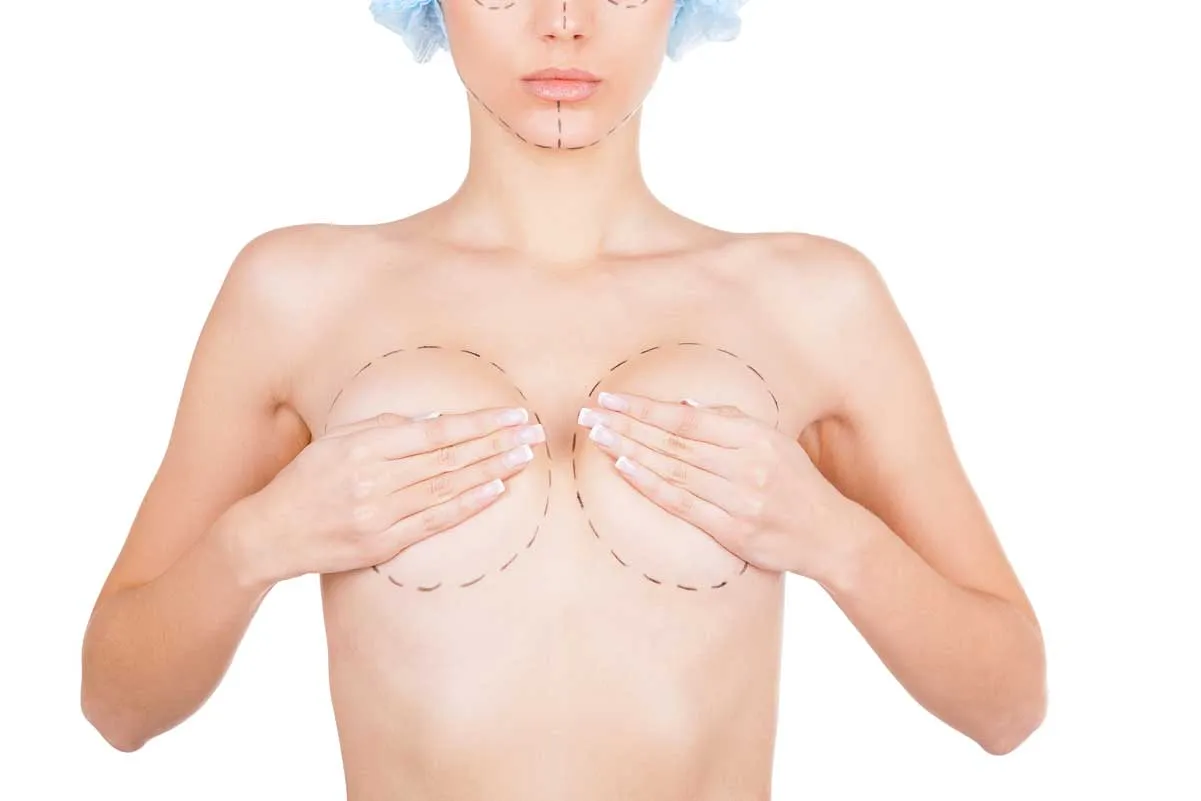
Each patient requires a bespoke surgical plan that is designed for the issue you present with.
The surgery is generally done under local anaesthesia and oral sedation.
If you need to be put to sleep for the surgery, anaesthetist fees apply.
Disclaimer – Prices mentioned are just indicative of current average price ranges for the treatment depending on degree of severity & surgical time required. You will need an in-clinic consultation (£50) for a quote applicable to you, best wishes Dr Prashant
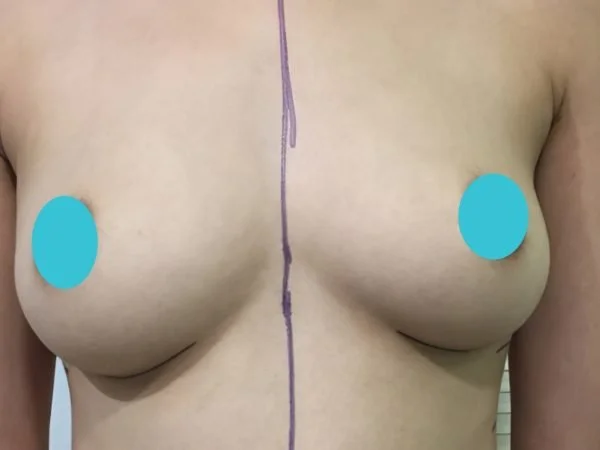
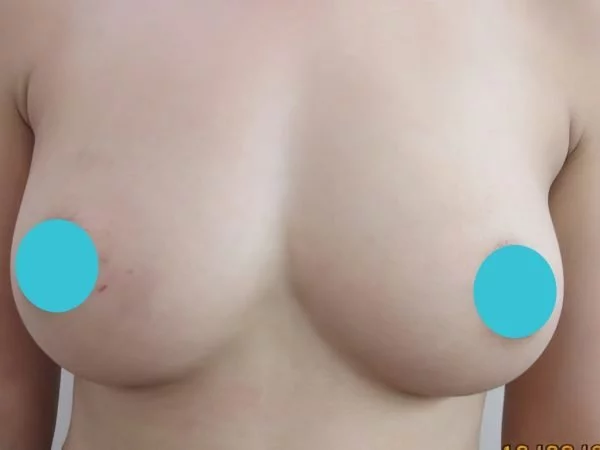
Why do I have flat breasts and what can I do about them?
The first thing to know is that the public image of an ideal breast volume and shape, has been largely shaped by media pressures, which ignores natural human variations of size, shape and proportions.
While most female breast development will be complete by the age of 18 years, weight gain, weight loss, pregnancy, breast feeding, will cause many changes to the dimensions of the breast.
If you have reason to believe that you would feel happier if you had better volume and shape to your breasts, if you prefer to wear padded bras, you might be a good candidate for breast enlargement.
There are basically 2 ways of adding volume to the breast, either using Breast Implants or through the use of Autologous Fat Transfer or Fat Transfer Breast Augmentation. In some case both procedures are combined.
Can I have Fat Transfer Breast Augmentation?
The question can be answered after a consultation, where your surgeon will evaluate the volume or capacity of the breast. If you have lost breast volume after breast feeding, your breast skin envelope will generally be roomier, compared to a young female who has a relatively flat chest, and a very taught skin envelope. The roomier the breast skin envelope the more capacity there exists for fat to be filled into the space.
An ideal Fat Transfer Breast Augmentation patient therefore will have adequate fat deposits on her tummy, flanks, thighs, and will also have a roomy breast skin envelop.
What is the difference between Fat Transfer Breast Augmentation and Breast Implants?
Both procedures are done with the idea of increasing breast volume, while this is done using your own fat tissue in the former, a Silicone Gel Implant is used to increase breast volume, size and shape in the latter.
Can you use fat instead of implants? Are the results of AFT Breast Enlargement same as those with Breast Implants?
As we discuss in our pros and cons section, fat transfer and implants are not interchangeable operations. The best outcome of a fat transfer breast enlargement is generally a one cup size increase in breast size, this limitation does not exist with implants.
Do I need multiple sessions of fat transfer breast enlargement? Is the operation painful?
The operation is done under local anesthesia, and while the breast will feel swollen, tender and appear bruised for 2–3 weeks, it won’t be very painful. Dr Prashant will always advice you to be prepared for more than one transfer as there is a limitation to how much fat can be transferred at one time.
What are Fat Transfer Breast Augmentation Pros, Cons and Risks?
There are several limitations of fat transfer, the first being the availability of excess fat in your body, if you are underweight and extremely slim there will not be enough fat to harvest. We cannot take the fat from another person and transfer it into your breast!
The other limitation is the roominess of the breast skin, as explained above.
The pros of fat transfer to the breast are that you get a very natural, lifelong enhancement of your breast, without any obvious scars.
The cons of breast augmentation with fat transfer is that the outcomes are not as predictable as those of a breast implant. This is to do with the survival of the fat tissue in the breast, there might be between 30 – 40% loss of the transplanted fat.
Another con of fat transfer to breast, is the limitation of how big the breast can be made. The general consensus is that a successful AFT Breast Augmentation will give you one bra cup size increase.
You might need multiple sittings of fat transfer to achieve implant level breast enlargement.
How many days does it take to recover from Fat Transfer Breast Augmentation?
You can return to work in about a week following the procedure, you will be advised to wear support bras and avoid heavy exertion and exercises for 2–3 weeks.
How long will the results of fat transfer breast enlargement last?
The result you get from your fat transfer will last you for your life, as long as you keep your weight constant. You will reduce or increase the result on the basis of weight loss or weight gain.
Can I see the Fat Transfer Breast Augmentation Results, Before and After?
Dr Prashant generally advices his patients to wait for 3–6 months before evaluating their results following fat transfer breast augmentation. You can see the before and afters in our website results section.
We and our partners, including Google, use cookies and personal data to analyse traffic and for ads personalisation and measurement. You can accept, reject or choose which cookies to allow. Privacy Policy • Cookie Policy • Terms & Conditions • Google Privacy
We use cookies to help you navigate efficiently and perform certain functions. You can choose which categories to allow below. Cookies categorised as Necessary are always active.
We also use third-party cookies for analytics and advertising. These are only stored with your consent. You can update or withdraw consent at any time via the cookie icon at the bottom-left. This site operates under UK GDPR, the Data Protection Act 2018, and the Privacy and Electronic Communications Regulations (PECR). Cookie Policy • Privacy Policy
Necessary cookies are required for core site features including security, network management, and consent storage.
| Cookie | Duration | Description |
|---|---|---|
hmdg_cookie_consent | 180 days | Stores your cookie consent preferences. |
PHPSESSID | Session | WordPress session identifier. |
wordpress_logged_in_* | Session | WordPress login authentication. |
Functional cookies enable enhanced features such as live chat and remembering preferences.
| Cookie | Duration | Description |
|---|---|---|
wp-settings-* | 1 year | Stores user interface preferences. |
Analytics cookies help us understand visitor behaviour. Controls analytics_storage for Google Analytics 4.
| Cookie | Duration | Description |
|---|---|---|
_ga | 2 years | Google Analytics — distinguishes users. |
_ga_* | 2 years | Google Analytics 4 — session persistence. |
_gid | 24 hours | Google Analytics — distinguishes users. |
_gat | 1 minute | Google Analytics — throttles request rate. |
Performance cookies collect aggregate, anonymous data about site performance.
| Cookie | Duration | Description |
|---|---|---|
_gat_gtag_* | 1 minute | Google Tag Manager — rate throttle. |
Marketing cookies track visits to deliver relevant ads. Controls ad_storage, ad_user_data, and ad_personalization.
| Cookie | Duration | Description |
|---|---|---|
_gcl_au | 90 days | Google Ads — conversion tracking. |
_gcl_aw | 90 days | Google Ads — click attribution. |
_gac_* | 90 days | Google Ads — campaign information. |
IDE | 1 year | Google DoubleClick — ad targeting. |
Powered by HMDG • Cookie Policy