
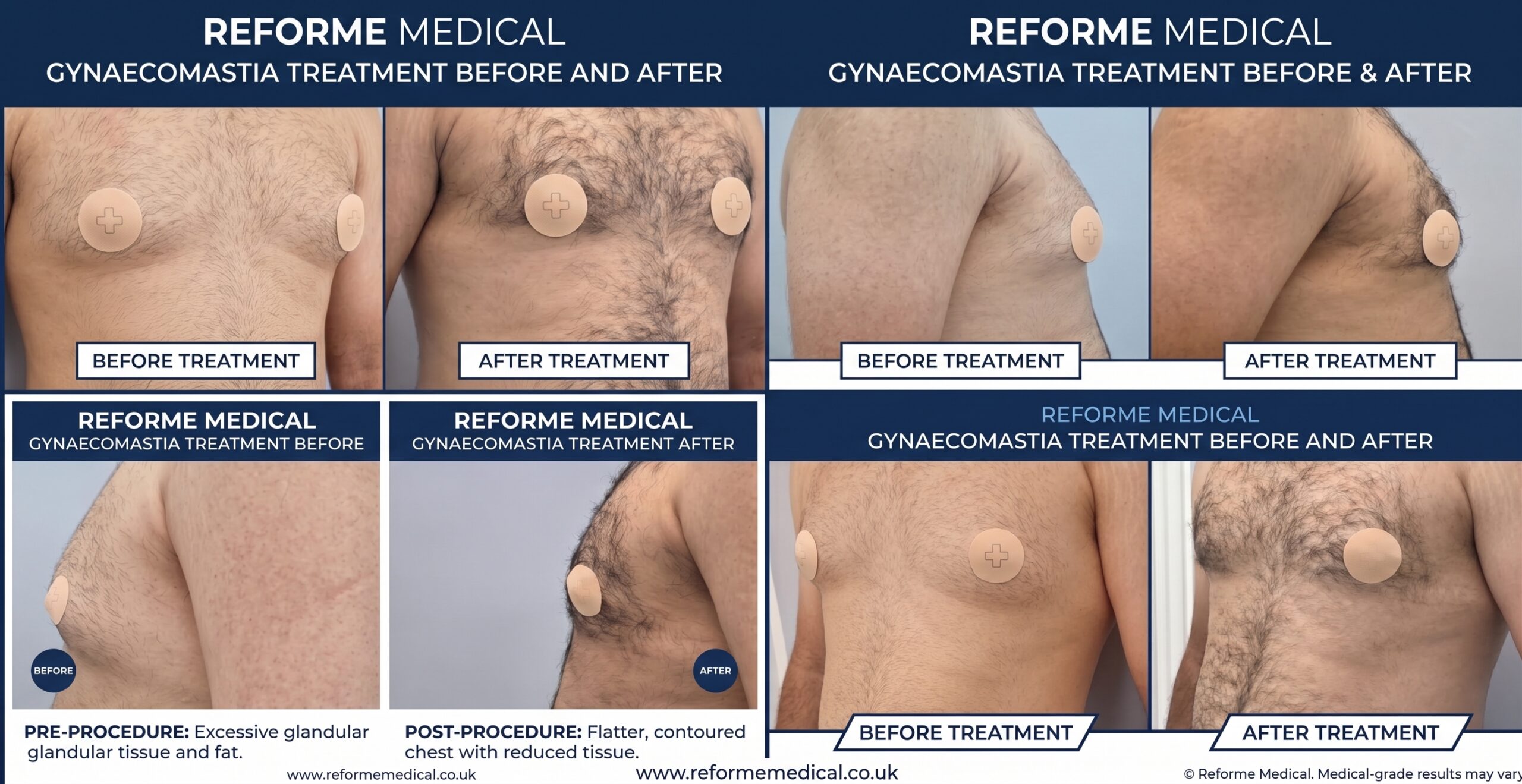
Gynaecomastia Surgery in Cardiff: The Ultimate UK Guide to Male Chest Reduction
Gynaecomastia surgery (male chest reduction) is a specialised surgical procedure designed to remove excess glandular breast tissue, stubborn fat, or sagging skin from the male chest. Performed under local anaesthetic, the treatment flattens and reshapes the chest to create a firmer, more masculine contour. In the UK, professional gynaecomastia surgery typically costs between £3,500 and £6,500, depending on the severity (Grade I to IV) and whether liposuction is combined with excision.
For men across South Wales and the West of England, dealing with enlarged male breasts—often colloquially termed “man boobs” or “moobs” — can take a severe emotional toll. Whether caused by hormonal imbalances, genetics, weight fluctuations, or medication side effects, gynaecomastia rarely responds to diet and exercise alone. If you are searching for a permanent solution, receiving treatment at a medically regulated clinic close to home ensures safety, comfort, and seamless post-operative care.
At Reforme Medical, based in central Cardiff, we provide expert, consultant-led care for patients travelling from across the region—including Newport, Swansea, Bridgend, the Vale of Glamorgan, Monmouthshire, Bristol, Bath, and Gloucestershire.
What Is Gynaecomastia? (True Gynaecomastia vs Pseudogynaecomastia)
To choose the right treatment, it is vital to understand the difference between true gynaecomastia and pseudogynaecomastia:
- True Gynaecomastia: Characterised by the growth of firm, fibrous glandular tissue directly behind the nipple-areola complex. It is often sensitive or tender to the touch and cannot be burned off through cardiovascular exercise or weight training.
- Pseudogynaecomastia: Caused solely by excess adipose (fatty) tissue accumulation on the chest without significant glandular proliferation. This is common in men who have experienced weight gain.
- Mixed Gynaecomastia: The most common presentation, featuring a combination of both dense glandular tissue and surrounding excess fat.
Understanding Gynaecomastia Severity: Grade I to Grade IV
Surgeons classify male breast enlargement using a standard grading system to determine the required surgical technique:
| Grade | Visual Characteristics | Typical Surgical Approach |
|---|---|---|
| Grade I | Minor localized gland enlargement behind the nipple; no skin excess. | Direct glandular excision or VASER liposuction. |
| Grade II | Moderate chest enlargement covering the pectoral area; no skin excess. | Liposuction combined with sub-areolar gland excision. |
| Grade III | Moderate to severe enlargement with mild skin redundancy. | Excision, liposuction, and minimal skin tightening. |
| Grade IV | Severe enlargement resembling female breasts with significant redundant skin sagging. | Full tissue excision, liposuction, and skin re-sectioning/nipple repositioning. |
Causes of Male Breast Tissue Enlargement
Gynaecomastia is caused by an imbalance between the hormones estrogen (which stimulates breast tissue proliferation) and testosterone (which inhibits it). Primary root causes include:
- Hormonal Shifts: Natural fluctuations during puberty or age-related drops in testosterone (andropause).
- Medications: Anabolic steroids, anti-androgens, certain heart medications, anti-anxiety treatments, and antibiotics.
- Lifestyle Factors: Anabolic steroid use, heavy alcohol consumption, or cannabis use.
- Underlying Health Conditions: Hypogonadism, hyperthyroidism, kidney or liver failure, and testicular tumours.
Surgical Techniques: How Male Chest Reduction Is Performed
At Reforme Medical, surgical treatment is tailored precisely to the composition of your chest:
1. Direct Gland Excision
When dense glandular tissue is present, a small, discreet incision is made along the bottom border of the dark skin surrounding the nipple (the peri-areolar border). The firm gland is meticulously excised under direct vision.
2. Liposuction (Targeted Fat Removal)
If fat contributes to chest volume, specialised liposuction—such as suction-assisted or ultrasound-assisted liposuction—is used to blend the chest edges, contoured toward the latissimus dorsi and abdominal muscles for a athletic frame.
3. Combination Approach
Most patients achieve optimal results through a blended procedure: liposuction to sculpt the chest contours, followed by gland excision to eliminate the puffy nipple appearance entirely.
Gynaecomastia Surgery Cost UK (2026 Pricing Breakdown)
Private gynaecomastia surgery in the UK varies based on the complexity of the case, surgical facility fees, surgeon expertise, and anaesthetic requirements. On average, expect the following investment structure:
| Procedure Type | Average UK Price Range (£ GBP) | Inclusions |
|---|---|---|
| Liposuction Only (Pseudogynaecomastia) | £3,200 – £4,500 | Surgeon fee, facility, local/sedation, compression garment. |
| Gland Excision + Liposuction (Grade I–II) | £4,500 – £6,000 | Full surgical team, facility fees, follow-up appointments, garments. |
| Complex Revision / Grade IV Skin Resection | £6,000 – £8,000+ | Local or IV sedation anaesthetic, extensive skin correction, garments |
Note: While the NHS occasionally funds gynaecomastia surgery, criteria are exceptionally strict, and treatment is rarely granted unless there is severe, documented physical distress or underlying pathology. Most patients opt for private treatment for timely, high-specification care.
Recovery Timeline & Aftercare Requirements
Understanding recovery helps ensure smooth, long-term results with minimal disruption to your routine:
- Days 1–3: Expect mild to moderate soreness, swelling, and bruising. Pain medication manages discomfort effectively. You will wear a chest compression garment continuously.
- Week 1: Most patients take 5 to 7 days off work (longer if performing heavy manual labor). Walking is encouraged to promote circulation.
- Weeks 2–3: Swelling begins to subside significantly. You can return to light everyday activities and light walking. The compression garment must still be worn 24/7.
- Weeks 4–6: You can transition to wearing the compression vest during the day only. Gentle cardiovascular exercise can resume.
- Month 3 onwards: Residual swelling resolves, revealing final chest contours. Scarring fades gradually over 12 to 18 months.
Safety, Regulation, and Patient Care Standards
When undergoing cosmetic or reconstructive surgery in the UK, safety is paramount. Patients across South Wales and the West of England should verify that their clinic meets national healthcare governance frameworks:
- Doctor Accreditation: Ensure your surgeon is fully registered with the General Medical Council (GMC)
- Regulatory Registration: In Wales, healthcare facilities must be registered and regularly inspected by Healthcare Inspectorate Wales (HIW). English facilities are regulated by the Care Quality Commission (CQC). These bodies enforce stringent clinical safety, hygiene, and patient privacy standards.
Why Travel to Reforme Medical in Cardiff?
Located in the heart of Cardiff, Reforme Medical serves as a regional centre of medical excellence for patients seeking discreet, expert male chest reduction. Our central location is easily accessible for patients travelling within a 2-hour catchment area:
- Newport & Vale of Glamorgan: 20–30 minutes via the M4/A48.
- Bridgend & Swansea: 35–50 minutes via the M4 Eastbound.
- Monmouthshire & South Wales Valleys: 40–55 minutes via the A449/A470.
- Bristol & Bath: 45–65 minutes across the Prince of Wales Bridge via the M4 Westbound.
- Gloucestershire: 75–90 minutes via the M5 and M4 Westbound.
Frequently Asked Questions (UK Patient Intent)
Is gynaecomastia surgery painful?
The procedure is performed under local anaesthetic with sedation meaning you will feel no pain during surgery. Post-operative discomfort is typically mild to moderate for the first few days and is easily managed with prescribed analgesics.
Are the results of male chest reduction permanent?
Yes. Once excised, glandular tissue cannot regrow. Fat cells removed via liposuction are also permanently gone. However, maintaining a stable weight and avoiding anabolic steroids or medications known to cause gynaecomastia is important to prevent remaining fat cells from enlarging.
Will I have visible scars?
Incision placement is intentionally discreet—typically hidden along the natural contour of the lower edge of the dark nipple skin (areola). Liposuction punctures are tiny (approx. 3–4mm) and strategically placed in natural creases. Scars fade significantly over time.
Can exercise fix gynaecomastia without surgery?
If your chest enlargement is purely fat (pseudogynaecomastia), weight loss through diet and exercise may reduce its appearance. However, true glandular gynaecomastia consists of dense, fibrous tissue that cannot be reduced by exercise or diet.
Gynaecomastia vs Neck and Body Contouring: Can I Combine Treatments?
Many male patients elect to address multiple areas of concern during a single surgical session or recovery window. To learn more about facial and neck profile adjustments, read our comparative guide on Chin Liposuction vs Neck Lift Procedures.
Take Control of Your Chest Profile Today
Ready to regain your confidence and achieve a flatter, firmer chest? Book a confidential, specialist consultation with our GMC-registered doctors at our flagship Cardiff clinic, serving patients across South Wales, Bristol, and the West of England. Book Your Consultation at Reforme Medical